If you’ve used AI tools like ChatGPT, Claude, or Gemini, you’ve probably seen the term “tokens” everywhere. Whether it’s API pricing, model limits, or “context windows,” tokens are at the core of how AI actually works.
So what exactly are tokens—and why do they matter so much? This guide breaks it all down in a clear, practical way.
What Are Tokens?
At a basic level:
A token is the smallest unit of text that an AI model processes.
It’s not exactly a word or a character. A token can be:
- A full word (
hello) - Part of a word (
un+believable) - Punctuation (
.,,) - A single Chinese character or word (depending on tokenization)
Example:
I love AI toolsTokenized as:
[“I”, “love”, “AI”, “tools”] → 4 tokensBut a more complex word:
unbelievableMight become:
[“un”, “believ”, “able”] → 3 tokensWhy Not Charge by Word Count?
A common question arises: why don’t AI platforms simply charge by word or character count, much like traditional translation services? The shift to token-based billing is driven by three fundamental technical necessities. First, language standardization is nearly impossible with word counts. While English relies on clear spaces between words, languages like Chinese do not, and others like Japanese or Korean possess highly complex morphological structures. Tokens provide a universal metric that standardizes processing costs across all human languages.
Second, tokens represent how models actually think. AI models do not see sentences or words as humans do; instead, they process sequences of mathematical vectors. The workflow moves from $Input \rightarrow Tokenization \rightarrow Vectors \rightarrow Model$, and finally back to $Output Tokens$. In this architecture, tokens are the true computational unit of the system’s brain.
Finally, tokenization allows for more accurate pricing based on actual computational complexity. Simple, common words might only require a single token, whereas rare technical terms or complex coding strings require multiple tokens to break down. By billing based on tokens rather than characters, platforms can ensure that pricing accurately reflects the real-world GPU power and compute consumed by the model to generate a specific response.
Tokens vs Words: What’s the Difference?
| Content Type | 1 Token ≈ |
|---|---|
| English | ~0.75 words |
| Chinese | ~1 character |
| Mixed text | 1–4 characters |
Example:
- 1000 tokens ≈
- ~750 English words
- ~1000 Chinese characters
In many cases, Chinese content is more token-efficient.
How AI Pricing Works
The fundamental formula for AI billing is simple: Input Tokens + Output Tokens = Total Usage. To visualize this, consider a typical interaction where you ask the system to perform a task. If your prompt is “Write an SEO article,” that short instruction might account for 10 input tokens. The AI then generates a comprehensive response that could span 500 output tokens. In this scenario, your total billed amount for the transaction would be 510 tokens. This breakdown is crucial because most providers price input and output tokens at different rates, as generating new text typically requires more computational power than reading the provided instructions.
Why Output Tokens Cost More
On many platforms:
- Input tokens = cheaper
- Output tokens = more expensive
Reason:
Generating text requires more computation than reading it
What Is a Context Window?
Another key concept:
The context window is the maximum number of tokens a model can “remember” at once.
Examples:
- 8K context → ~8,000 tokens
- 32K context → ~32,000 tokens
- 128K context → very long documents
Real Example:
Conversation history:
Turn 1: 100 tokens Turn 2: 200 tokens Turn 3: 300 tokensWhy Context Window Matters
The context window is a critical factor because it directly defines the boundaries of an AI’s operational capacity. First, it dictates the limits of content length that the model can handle at once. Whether you are generating long-form articles, analyzing thick PDF documents, or maintaining extensive multi-turn conversations, the context window determines how much information can be processed before the model starts losing track of earlier data.
Second, the size of this window significantly affects the overall quality of the AI’s memory and performance. A larger context window allows for a deeper understanding of complex relationships within the data, leading to more coherent and contextually relevant responses. When a model can “see” more of the conversation history or document at once, it is less likely to hallucinate or contradict itself. Finally, the context window has a direct impact on cost. Utilizing more of the available context means processing a higher volume of tokens, which inevitably leads to increased token usage and higher operational expenses for each request.
More tokens → higher cost
Tokens are the currency, memory, and computation unit of AI systems.

AI Tokens in Images and Videos
As AI evolves from processing text to understanding visual media, the concept of tokens has also expanded. When you use multimodal models like GPT-4o or Gemini 1.5 Pro to generate or analyze images and videos, the system doesn’t see them as files, but as specialized visual tokens.
How Image Tokens Are Calculated
When you upload an image to an AI model, it does not interpret the picture as a whole the way humans do. Instead, the image is first transformed into a structured format that the model can process mathematically. The process begins by dividing the image into a grid of small regions, commonly referred to as patches or tiles. Each patch represents a fixed-size block of pixels, such as 16×16 or 32×32 pixels, depending on the model design.After this division, each patch is converted into a numerical representation known as an embedding. This embedding captures important visual features like colors, edges, textures, and patterns. In this sense, each patch functions similarly to a token in text processing. Just as a sentence is broken into tokens for a language model, an image is broken into patches for a vision model. The total number of patches generated from an image directly affects how much computation is required.
For billing purposes, most AI platforms simplify this underlying process by using either a fixed token cost or a resolution-based pricing system. Lower-resolution images are often assigned a standard token range, typically somewhere between 85 and 800 tokens per image. This allows platforms to provide predictable pricing without exposing users to the complexity of patch-level calculations.When dealing with higher-resolution images, the calculation becomes more detailed. Instead of processing the image as a single unit, the system divides it into multiple tiles. Each tile is then processed separately, generating its own set of patches and consuming additional tokens. As image resolution increases, the number of tiles also increases, which leads to higher overall token usage. For example, a high-resolution image can require several times more tokens than a smaller image due to the larger number of visual elements it contains.
Another important factor is visual complexity. A simple image with large areas of solid color requires fewer patches to represent, while a detailed image—such as a chart, screenshot, or diagram—contains more edges, text, and fine structures. These details require more patches to accurately encode, increasing the total number of tokens needed. Even if two images have the same resolution, the more complex one may still consume more computational resources.Some advanced models also apply dynamic processing strategies, where regions with more detail receive more attention or finer representation, while simpler areas are compressed more efficiently. Although this happens internally and is not directly visible to users, it reinforces the idea that both resolution and content influence token usage.
In summary, image token calculation is based on how an image is divided into patches and converted into numerical data. Each patch acts as a unit of computation, similar to a token in text. While platforms often simplify pricing through fixed or resolution-based models, the core principle remains consistent: higher resolution and greater detail result in more patches, which leads to higher token consumption.
How Video Tokens Are Calculated
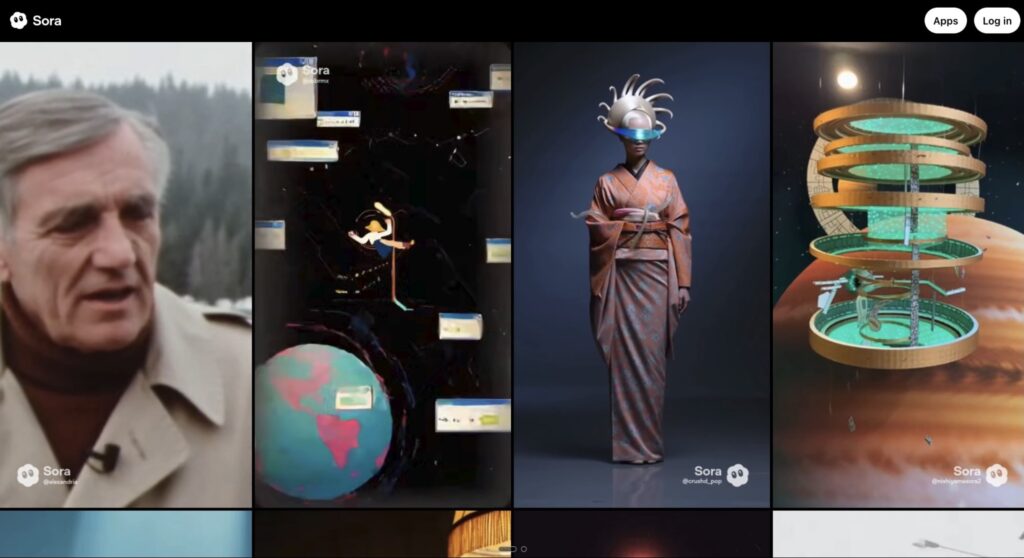
Video processing is significantly more complex than image processing because it introduces an additional dimension: time. Instead of analyzing a single static frame, AI models must interpret a sequence of frames that together form motion and context. To manage this efficiently, most models do not process every single frame of a video. Instead, they use a technique called frame sampling, where frames are extracted at a fixed interval, such as one frame per second or a few frames per second, depending on the task and model configuration.Each sampled frame is then treated in the same way as an image. The model divides the frame into patches, converts those patches into numerical embeddings, and processes them as visual tokens. In other words, every sampled frame contributes its own set of tokens, just like an individual image would. This means that video token usage is essentially the accumulation of tokens from all sampled frames.
The total number of tokens required for a video can be estimated by multiplying the number of sampled frames by the token cost per frame. For example, if a model samples one frame per second from a one-minute video, it will process 60 frames. If each frame corresponds to a certain number of tokens based on its resolution, then the total input tokens will be the sum of all those frames. Higher resolution frames or more complex visuals within each frame can further increase the token count.This is why longer videos quickly become expensive to process. Increasing the duration of the video increases the number of sampled frames, and increasing the sampling rate makes this growth even faster. For instance, sampling two frames per second instead of one would double the number of frames and, consequently, double the token usage. Similarly, high-resolution videos amplify the cost because each frame contains more visual data to encode.
Another important factor is temporal coherence. Some advanced models attempt to understand motion and relationships between frames, not just treat them as isolated images. While this can improve accuracy in tasks like action recognition or scene understanding, it also increases computational complexity and may require additional internal representations beyond simple frame-based token counting.Because video token usage grows rapidly with both length and resolution, it places heavy demands on the model’s context window. All sampled frames, along with any associated text input and output, must fit within the model’s maximum token limit. This is why large-context models are often required for video analysis. Models with very large context windows, sometimes exceeding one million tokens, are designed specifically to handle long sequences of visual and textual data without losing important information.
In summary, video tokens are calculated by breaking a video into sampled frames and then processing each frame as an image. The total token usage depends on three main factors: the duration of the video, the frame sampling rate, and the resolution and complexity of each frame. As these factors increase, token consumption grows quickly, making video one of the most resource-intensive types of input for AI systems.
Just as text models became more efficient over time, visual tokenization is also improving. Newer models are getting better at compressing visual data, allowing them to understand longer videos and higher-resolution images without a proportional increase in cost. For users, understanding this helps in optimizing workflows—for example, cropping an image to the most important area or shortening a video clip can significantly reduce the token count and lower your API expenses.